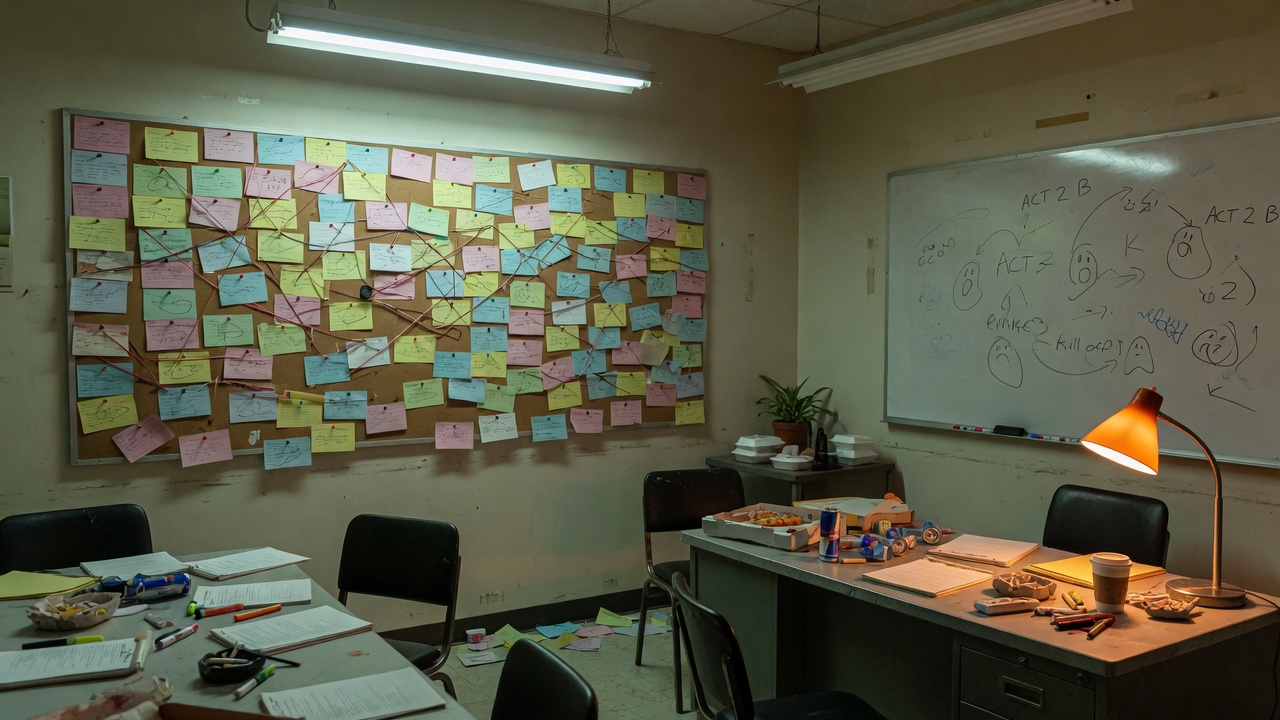
Procedurals never die. They molt.
The case-of-the-week is supposed to be over. It is on every app, wearing a new font.

Every few years a critic announces that the procedural is finished. Then a new one opens at the top of the chart, a doctor walks down a hallway at speed, a detective stares at a board, and someone says ‘we’ve got a situation.’
The format survives because it is honest about what most people want from a weeknight: a problem that ends. Prestige TV promised a wound that never closes. Procedurals promise a file that can be closed before bed.
The molt
The cop show became the lab show, then the small-town-with-a-secret show, then the ‘dark’ streaming mystery that is a procedural in a nicer coat. Same spine: a disruption, a team, a tell, a wrap. The difference is branding.
Even reality competitions are procedurals. A challenge, an alliance, an elimination, credits. The case is social instead of criminal.
Why writers snob them, and why that is a tell
They are hard to write well and easy to write smugly about. A good procedural has to invent a complete machine fifty times a year. That is craft. Calling it junk is often a way to avoid admitting you could not build the machine.
The Glare take
We will treat a well-made case-of-the-week as seriously as a limited series — not because they are the same art, but because they are the same industry. One pays the lights. The other gets the thinkpiece. A magazine that only covers the thinkpiece is covering a party, not a business.